Made-to-measure open wooden wardrobes in Baena
An open wooden wardrobe is a piece of furniture that is shown off just as it is: the clothes, the shelves and the edges all become part of the bedroom's decor. In Baena we design them for a single wall, with hanging rails, shelves and drawers laid out around what you reach for every morning. Here are the points to consider when deciding what stays on show, what is best protected and which wood suits each part, before you send us your configuration.
Shape your next wardrobe.
Try out the measurements, plan the interior layout and choose your finishes. See your idea take shape and share it with us so we can prepare your quote.
Send us your configuration with your measurements and we'll give you a guide price within 24 hours, free of charge. The measuring visit at your home comes afterwards.
When a wardrobe without doors works
A wardrobe without doors works well when the hanging clothes are kept tidy and the bedroom has enough light for the whole thing to look appealing. If you fold your clothes by colour and check your hangers before buying, an open wooden wardrobe suits you: you see everything at a glance and don't waste time opening doors.
It isn't the best idea if you store a lot of mixed bulky items, or if the room is also used for work with dust nearby. In that case it makes sense to combine the two: an open section for everyday things and a closed unit for whatever you don't want on display.
The difference from a walk-in wardrobe is one of scale. Here we are talking about a single wall or a compact arrangement within the room, not a whole space devoted to getting dressed.
Putting together a wall of hanging rails, shelves and drawers
Before drawing anything, make a simple inventory: how many metres of hanging clothes, how many stacks of folded items, and which small things need a drawer. That tells you how to divide the wall into vertical sections.
A rail for shirts needs about 100 cm of clear height; one for trousers folded in half needs considerably less, and a wide drawer can go underneath. High shelves, above two metres, are best kept for seasonal storage boxes, and you'll be glad of a step stool nearby.
A wardrobe without doors works through rhythm: alternate full areas with areas that have some breathing space. If it is all tightly packed shelves, the result looks like a warehouse rack. With a few empty gaps, the unit can breathe and the wood gets to shine.
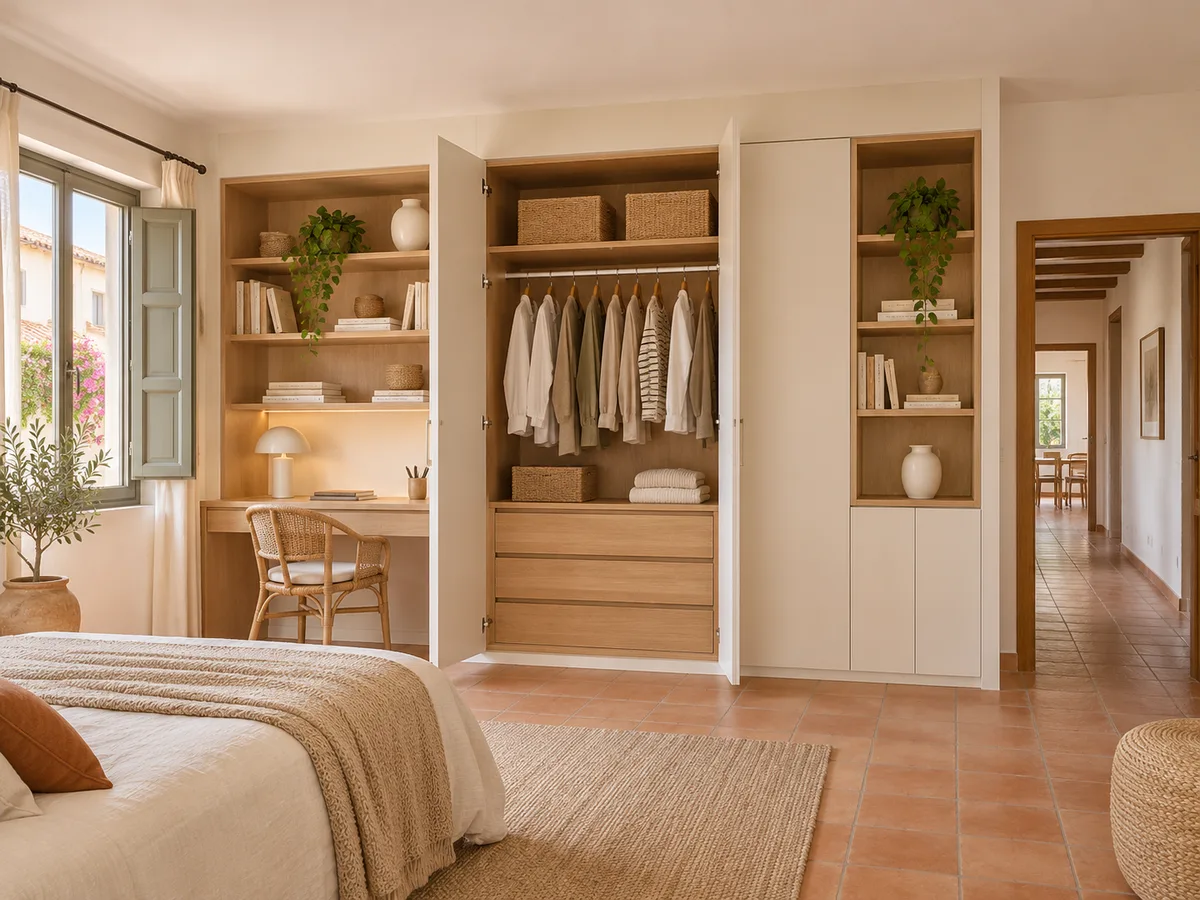
What to leave on show and what to protect
The practical rule is simple: what you use every day can stay open; what you rarely use and which gathers dust should not. Mid-season coats, bed linen and delicate handbags are better off in a drawer or a box with a lid.
Dust is the great enemy of open storage. In a home where the windows are opened often, clothes hanging without covers need a going-over with a feather duster every week. A short-fronted upper shelf, like a peak, catches most of the dirt that falls from the ceiling.
Shoes can go on sloping shelves at a low height. Jewellery, belts and watches, on the other hand, work better in a drawer with dividers inside the same unit.
Have you already measured the space?
Send us a photo and the approximate measurements on WhatsApp and we'll give you some initial guidance.
Visible material: solid wood, veneer or decorative finish
- 01
In an open wardrobe everything is visible, so the material can't be hidden. There are three routes. Solid wood has an unmistakable presence, though it is heavy and moves with changes in humidity. Natural veneer on board gives the same grain with greater stability on wide pieces. And a decorative imitation finish does the job when budget comes first and the unit sits in a poorly lit area.
- 02
What matters is that the quote names the material for each part: sides, shelves, rails and back panel. That way you know whether you are paying for real wood where it shows and economical board where it doesn't.
- 03
If real wood grain matters a lot to you, ask for the quote to distinguish solid wood from natural veneer part by part.
Sides, edges and back panel as part of the design
Without doors, the sides of the wardrobe stop being a hidden part. A 25 mm side panel with a solid edge looks well finished; a thin plastic edge shows from the bed. It's worth deciding whether the unit sits against a plain wall or stands as a freestanding piece with the back on view.
The back panel is the great forgotten element. A painted board back in a tone different from the wood adds depth and makes the clothes stand out. A back in the same material creates unity, but the whole thing then becomes visually heavier.
The plinth matters too. Raising the wardrobe a few centimetres off the floor lightens its look and makes it easier to run a mop underneath without knocking the wood, which is handy in a home that is mopped daily.
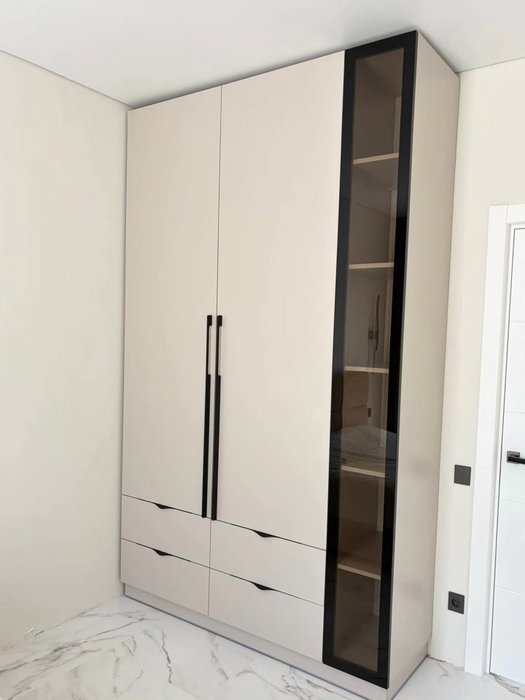
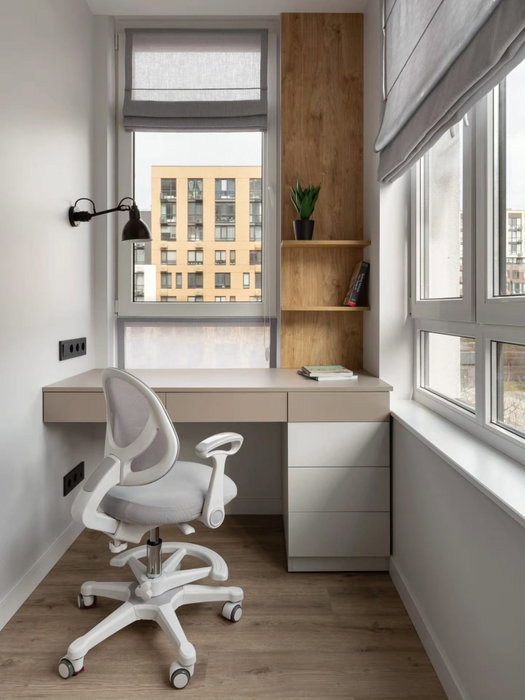
Latest work by SI, ARMARIO
@si.armario
Made-to-measure wardrobes and walk-in wardrobes
Latest posts
Everyday tidiness and keeping it clean
An open wooden wardrobe calls for a more disciplined tidying routine than a closed one, but nothing complicated. Each stack has its place and each rail its limit of hangers. When there is too much, the unit shows it straight away.
For cleaning, a dry or slightly damp cloth is enough on treated wood, plus a vacuum cleaner with a brush attachment for the shelves. Avoid products with a lot of alcohol on water-based finishes, as they can leave marks.
If you have pets or allergy sufferers at home, think about drawers for all the textiles you only use occasionally. That leaves the open wardrobe for the clothes you rotate often and wash regularly.
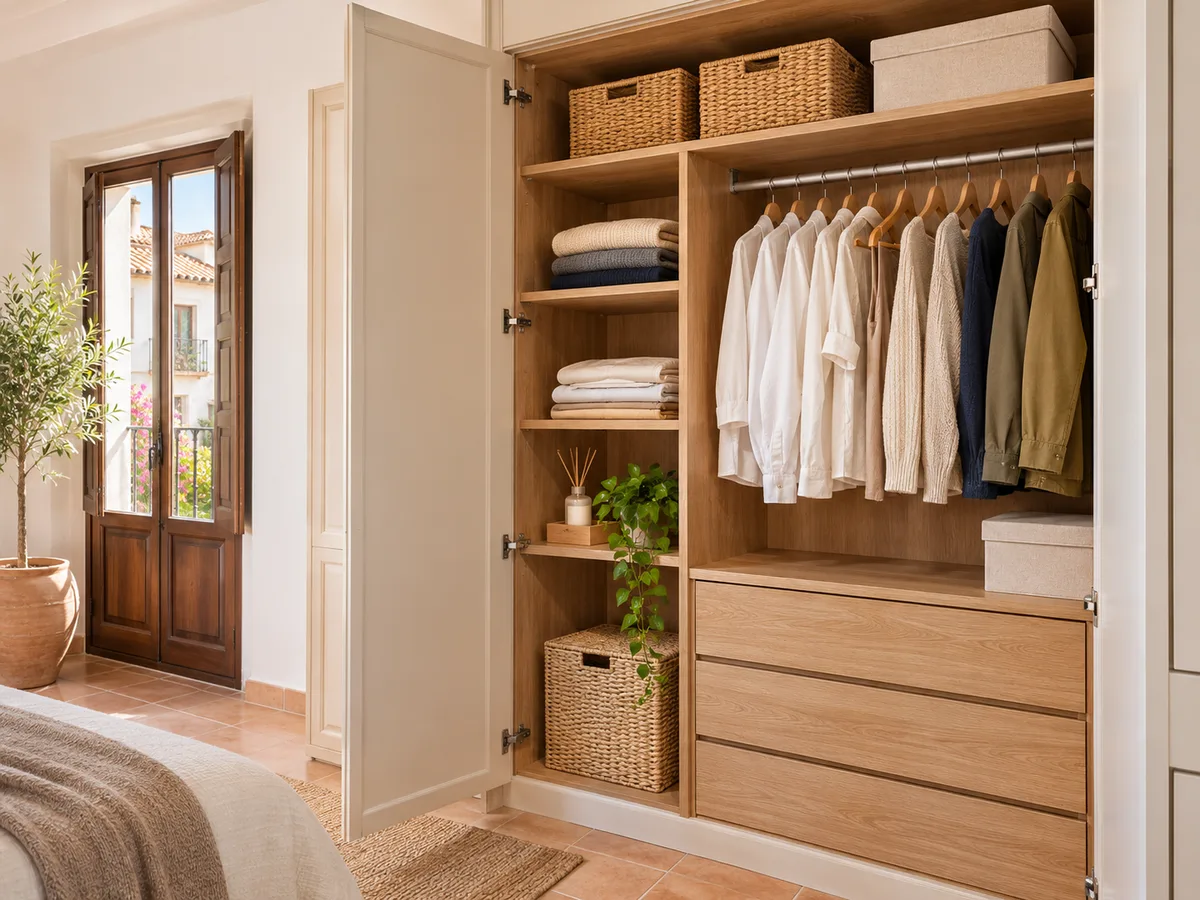
Ask us to come and measure up in Baena
- 01You leave us your name and your area.
- 02We message you on WhatsApp to agree a day.
- 03The measuring visit costs €50 and is free if you place an order.
Light and access in an open layout
Lighting becomes part of the furniture. A strip of warm light under each high shelf helps you choose your clothes and brings out the grain of the wood in the evenings. You need to decide in advance where the cable comes out and where the transformer is hidden, because with an exposed back panel there is not much room to disguise it.
Access matters too. A wardrobe without doors needs no space for doors to swing open, so it fits in narrow bedrooms where hinged doors would hit the bed. Do leave a 60 cm strip clear in front, though, so you can crouch down to the lower drawers comfortably.
What affects the quote in Baena
- 01
Three factors move the price of an open wooden wardrobe: the material of the visible parts, the number of drawers with runners and the overall height of the unit. Drawers add more work than shelves, and solid wood costs more than veneer.
- 02
It also matters whether the unit is built in between walls, with finishing pieces that need to be fitted, or is a freestanding module. To get your bearings, open the configurator from Baena, enter approximate measurements and we will prepare a design for you. With that configuration, the team will send you a guide price within the following 24 hours. Manufacturing takes around 2 to 3 weeks on average, and the measuring visit costs €50 only if you finally decide not to order the wardrobe.
Enquiry
Tell us about your project in Baena
- 1We read your message and look at your photos.
- 2We reply on WhatsApp with a first figure.
- 3We measure up and prepare the final quote. The measuring visit costs €50 if you don't go ahead with the order and is free if you do.
We don't cut a single board until you've approved the design and the price.
Questions
Frequently asked questions about wardrobes in Baena
After installation: warranty and care for your wardrobe.
Is this a walk-in wardrobe or a wall wardrobe?
The open wardrobe takes up a wall or a corner of a bedroom and is used from the outside. A walk-in wardrobe is a room or area of its own that you step into. If you just want to organise your clothes along one wall, an open wooden wardrobe is the right choice, and for a whole room a walk-in wardrobe is the better fit.
Where do I keep out-of-season clothes if the wardrobe has no doors?
The best approach is to set aside drawers or lidded boxes for them, at the top or bottom of the same unit. The wardrobe stays open, but the clothes you do not wear for months are kept free of dust and direct light.
Can I combine open areas with drawers that close?
Yes, that is the most common approach. Shelves and hanging rails stay on view, while the drawers hide the smaller items. It works very well in a made-to-measure open wardrobe because each section is sized according to what it holds.
Will the whole wardrobe be solid wood?
It does not have to be. You can ask for solid wood on the visible shelves and sides, natural veneer on the wide panels and plain board on the parts that cannot be seen. The key is that each piece is listed with its material in the quote.
How deep does a wardrobe without doors need to be?
For hanging clothes you need about 55 cm of usable depth. If there are only shelves and small drawers, 35 or 40 cm is enough and the unit feels lighter. In narrow bedrooms in Baena, reducing the depth can be the key to not squeezing the walkway.
Is an open wardrobe suitable for a child's bedroom?
Yes, as long as the lower shelves have rounded edges and the heavy items are fixed to the wall. Over time you can add modules or change the heights of the rails as the child grows.
Shall we talk about your project?
Send us a photo of the space and some approximate measurements on WhatsApp: we'll give you some initial guidance and arrange the measuring visit.